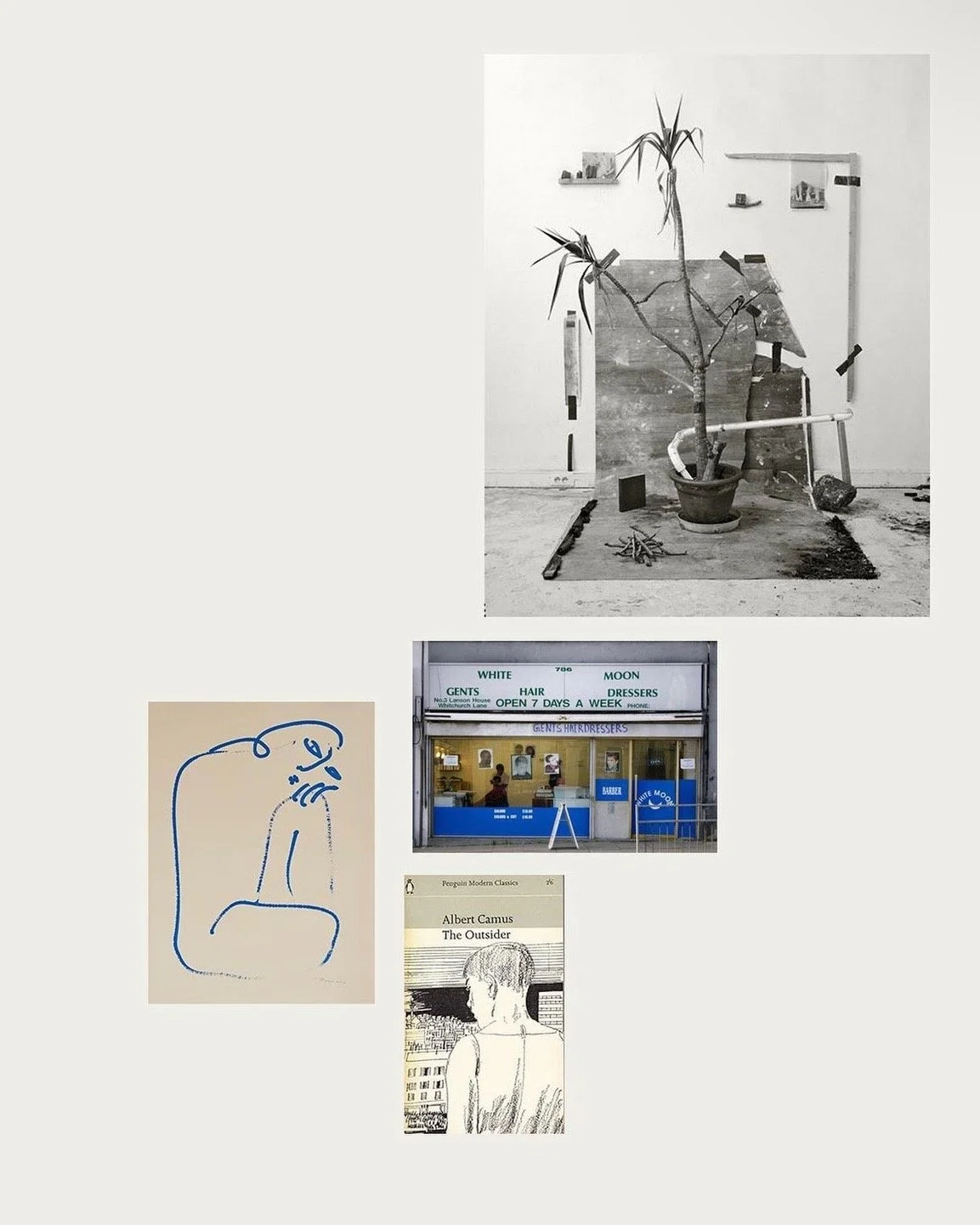
The Outsider
The mood board is often treated as a preliminary step, useful but secondary. In practice, it can be more consequential.
At its most effective, a mood board is not a collection of references, but a form of editing. It establishes relationships: between image and image, texture and colour, reference and intention. What matters is not the quantity of material, but the clarity of selection.
This process is inherently interpretive. The person assembling the board defines a position through inclusion, omission, and proximity. The viewer, in turn, reads it differently, bringing their own associations to what is presented. Meaning is not fixed, but negotiated.
For those less inclined towards verbal explanation, the mood board offers an alternative mode of communication. It allows ideas to be shared without being fully resolved, creating space for discussion rather than closure.
The works in this series were developed without a formal brief. They are deliberately open—structured enough to suggest direction, but unresolved enough to allow for multiple readings.
Not conclusions, but starting points.